History
The city that motivates Canada
Oshawa's story runs from a canoe crossing on Lake Ontario to the largest carriage maker in the British Empire to the headquarters of General Motors of Canada. Knowing that history explains the city's geography: the downtown, the plant lands, the mansions, and the neighbourhoods built for generations of autoworkers.
The timeline
Eleven moments that made Oshawa
Like any industrial city, Oshawa was shaped by one family's ambition and one industry's fortune. The McLaughlin story anchors the middle of everything: an entrepreneurial carpenter whose carriages became Canada's automobiles.
- Pre-1700s
The crossing place
Oshawa sits on the Lake Ontario shore in the traditional territories of the Haudenosaunee and Huron-Wendat peoples. The name likely comes from the Ojibwa word aazhaway, meaning "crossing place", where canoe travellers portaged to the trail.
- 1760
A fur-trade outpost
The French built a trading post at the harbour, making the site a transfer point on the fur trade route.
- 1850
A village called Oshawa
Settled first as Skae’s Corners, the community incorporated as the Village of Oshawa, growing on tanneries, asheries, and wagon works.
- 1867
The McLaughlin carriage shop
Robert McLaughlin founded his carriage-making business near Enniskillen. A decade later he moved it to Oshawa, near Simcoe Street and Kingston Road.
- ~1914
The largest carriage maker in the British Empire
The McLaughlin Carriage Works grew into one of the largest carriage manufacturers in the country. When fire nearly destroyed the plant in 1899, Oshawa kept the firm with an interest-free $50,000 loan.
- 1907-1918
From carriages to cars
Sam McLaughlin partnered with Billy Durant to build McLaughlin-Buicks, acquired Chevrolet of Canada in 1915, and in 1918 GM, Chevrolet, and McLaughlin merged into General Motors of Canada, headquartered in Oshawa.
- 1915-1917
Parkwood Estate rises
The McLaughlin family built Parkwood, now a National Historic Site and one of Canada’s finest estate gardens, on the north edge of the city.
- 1924
The City of Oshawa
Oshawa incorporated as a city, its identity now inseparable from the automobile plant at its core.
- 1963
The Automotive Museum opens
The Canadian Automotive Museum opened downtown to preserve Canada’s car-building story, from McLaughlin carriages to modern racing.
- 1980s
The peak of the Motor City
GM employment reached roughly 23,000 people in Oshawa, defining the city through booms and busts for a generation.
- 2019-2021
Retooling for a new era
Sedan production ended in 2019. The Oshawa plant retooled and reopened in late 2021 building pickup trucks, with thousands still employed there today, alongside a diversified regional economy.
History you can visit
Where the past is still on display
Parkwood Estate
Sam McLaughlin's 1915-1917 estate, now a National Historic Site with one of Canada's great formal gardens. Films and tours run year-round.
Canadian Automotive Museum
Downtown at 99 Simcoe Street South, housing a world-renowned collection of Canadian-built and Canadian-owned cars in a 1920s showroom.
The Four Corners & downtown
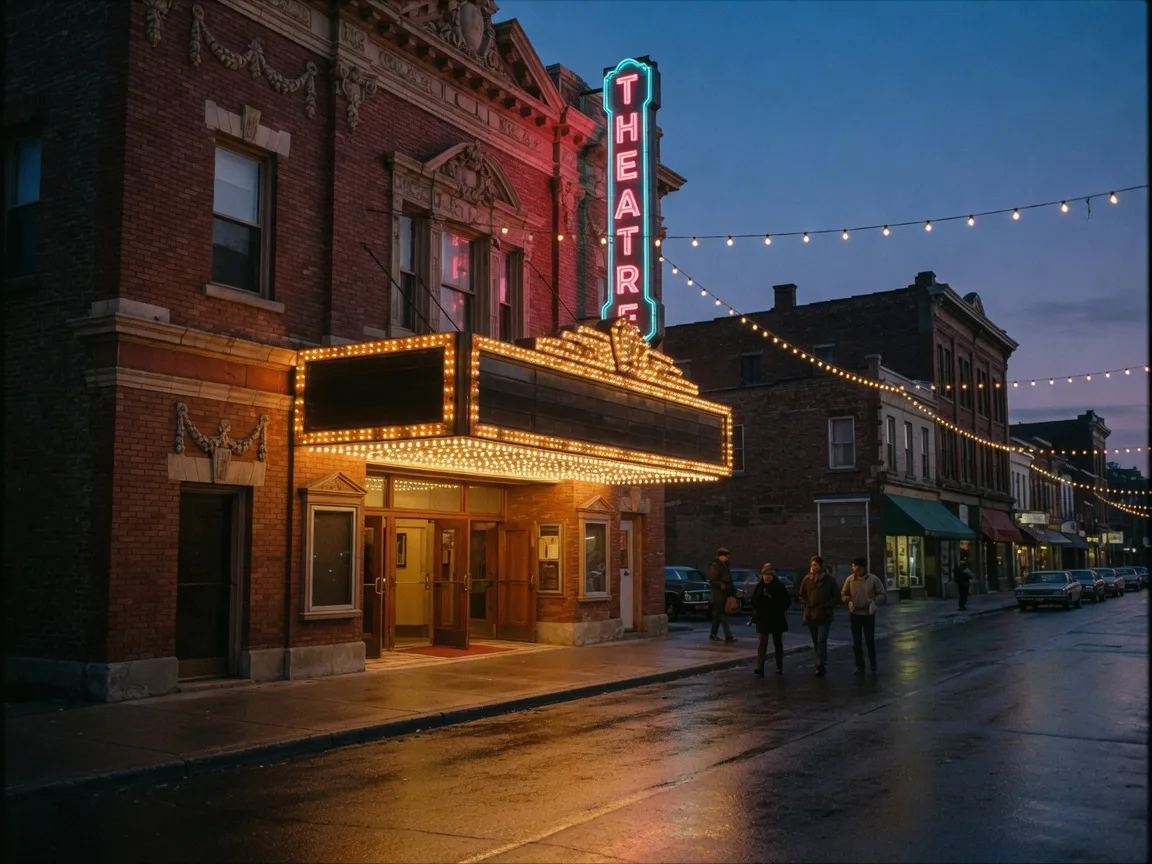
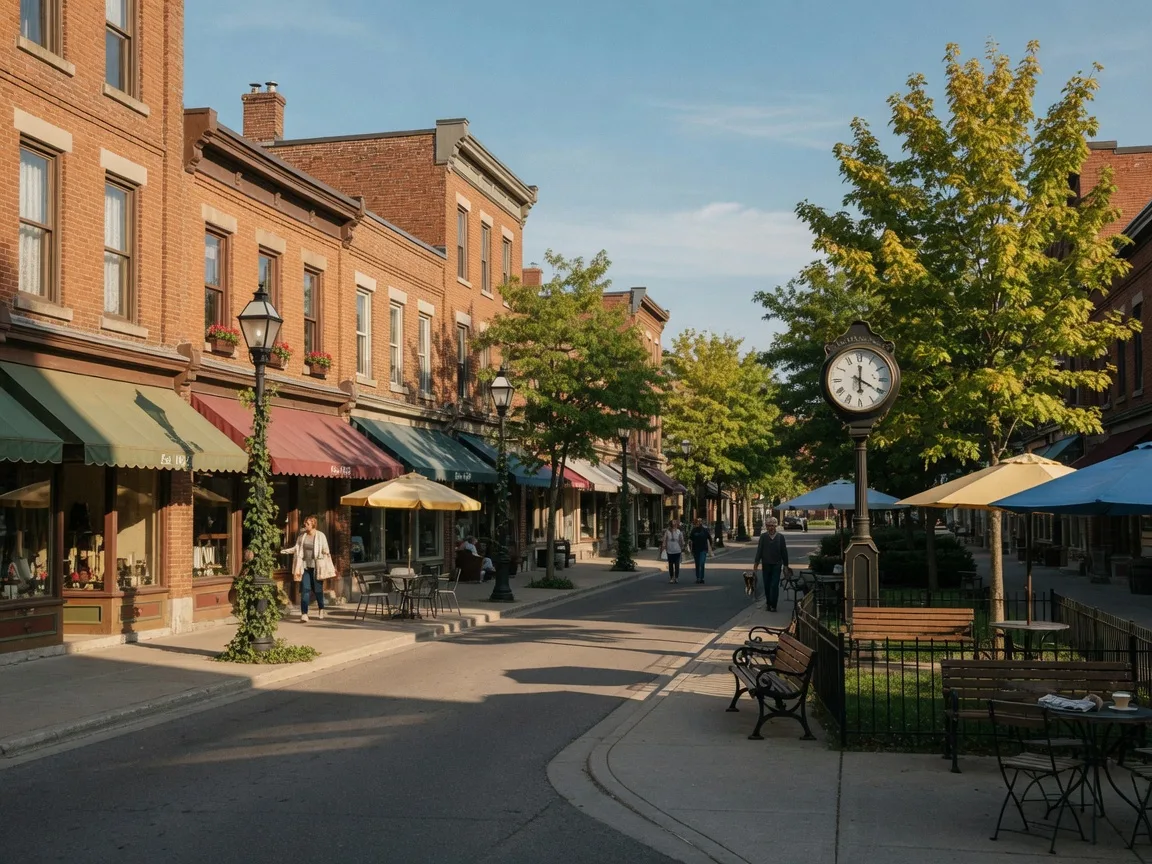
King and Simcoe streets still hold the brick commercial blocks of the carriage era, now dotted with cafes, galleries, and the 1920 Regent Theatre.
History explains the housing, and we can show you both
Want a 1920s brick in O'Neill or a 1960s bungalow in Centennial? Every era has a neighborhood. Tell us which chapter of the story you like best.