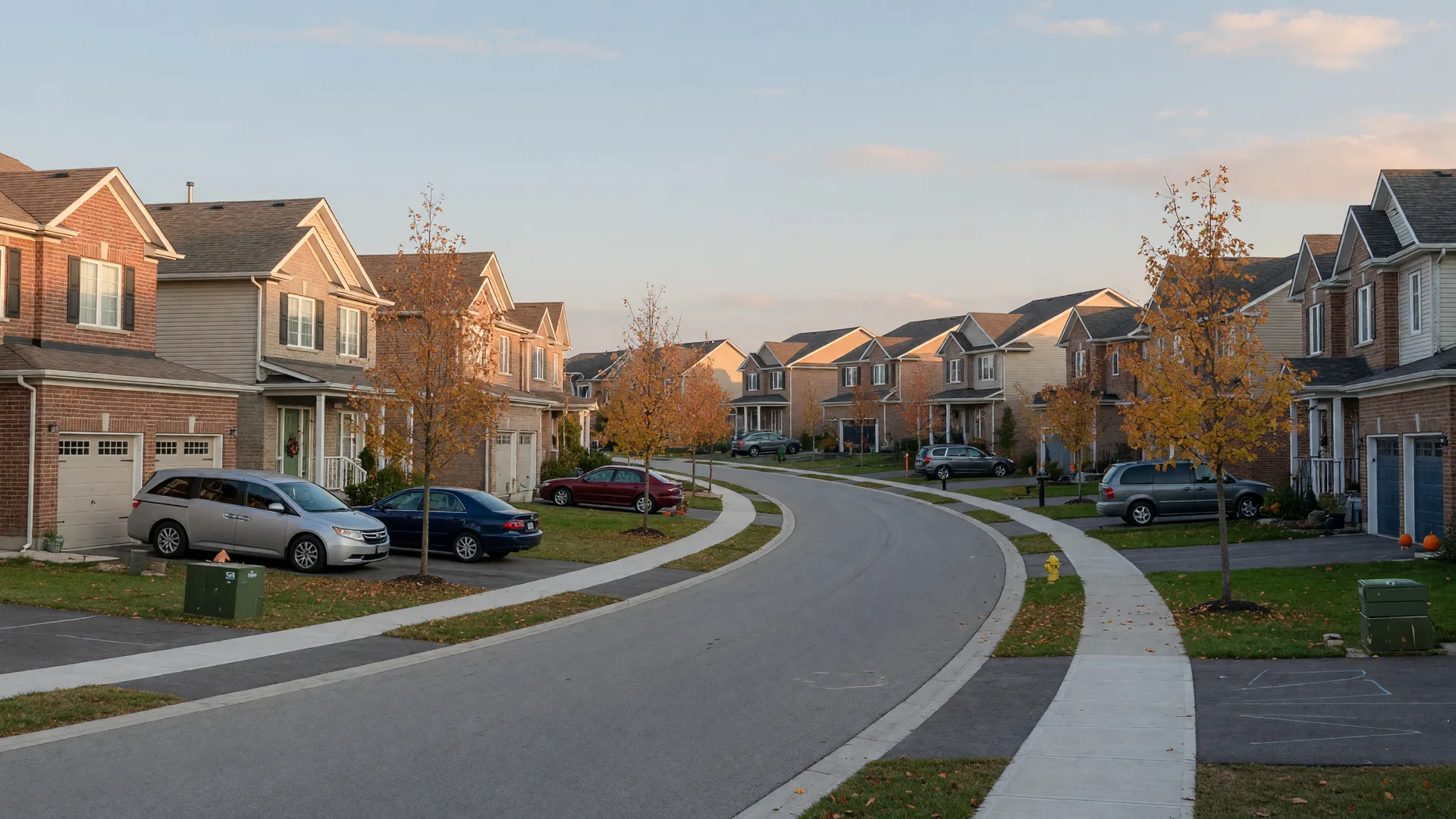
If you are asking what it is really like to live in Kedron, Oshawa, the short answer is this: Kedron is a fast-growing family suburb in north-east Oshawa where spacious lots, newer homes, and solid schools meet the easiest Highway 407 access in the city. Once a quiet farm village that joined Oshawa in 1974, Kedron is now one of the city's fastest-growing neighbourhoods, with new subdivisions rising on former farmland around Conlin Road. This guide covers Kedron's housing, schools, commute, and everyday life so you can decide whether this north-east corner of the city fits your move.
Living in Kedron, Oshawa: the short answer
Kedron sits in the north-east corner of Oshawa, where the city's suburban growth has pushed furthest into what was once farm country. The street grid is quiet and residential: crescents, cul-de-sacs, and wide lots instead of storefronts. Two very different Kedrons meet here. The older section, mostly south of Conlin Road, holds 1960s-era homes on generous, mature lots. The newer section, built from the 1990s through today, is full of large detached family homes, some still under construction as builders open new phases. Kedron's appeal is simple: space per dollar compared with the GTA, schools that serve the area well, and the 407 minutes from the door.
Where exactly is Kedron?
The Kedron planning area in north-east Oshawa is roughly bounded by Taunton Road to the south, Britannia Avenue to the north, Harmony Road to the west, and Townline Road to the east, with Conlin Road running through the middle of it. The East Branch of Oshawa Creek winds through the neighbourhood, which is why so many streets and parks trace the creek valley. Kedron sits near the north end of Simcoe Street, home of Ontario Tech University and Durham College, and most of the area falls in the L1L postal district. The pre-war character of downtown Oshawa is a 10 to 15 minute drive south. For the street-by-street picture, including where the older and newer pockets sit, our full Kedron neighbourhood guide has the details.
A brief history of Kedron
Kedron was its own place long before it was an Oshawa neighbourhood. It grew up as a small rural village around the crossroads where farms used the East Branch of Oshawa Creek, and it stayed unincorporated farmland until the city absorbed the surrounding townships in the 1974 amalgamation. The name survives today in Kedron Street, Kedron Public School, and Kedron Dells Golf Club, and the area remained largely rural well into the 1990s. What changed was the Highway 407 extension: once the toll highway reached the north end, builders followed, and Kedron turned from farmland into one of the city's fastest-growing suburbs.
What the housing stock looks like
Kedron is almost entirely single-family territory. The older streets hold modest brick and vinyl homes from the 1960s on lots far larger than you will find in newer subdivisions, which makes them a magnet for buyers who want yard space and room for mature trees. From the 1990s onward, builders filled in with two-storey detached homes, and the newest phases bring modern farmhouse and traditional styles around 2,000 to 3,000 square feet, typically four bedrooms and a double garage. Builders including Minto and Tribute have been active in the area, and new detached homes commonly sit on 30 to 36 foot lots, with some earlier phases closer to 43 feet.
Pricing reflects that newer stock. Third-party data from Zolo's Kedron housing trends put the average home price around $900,000 to $960,000 in 2026, with listings ranging from roughly $600,000 to $1.4 million and townhomes closer to $650,000. New-build detached homes typically list from about $900,000 to $1.2 million. For context, Oshawa's citywide average home price was $680,252 in September 2026, so Kedron sits above the city average, in line with the rest of the north end. Our housing styles and prices page compares the north end with the rest of the city, and the monthly market update tracks the citywide numbers.
Kedron's residents skew younger and more family-oriented than Oshawa as a whole. Neighbourhood data from Wahi and AreaVibes puts the median age in the mid-30s, below the citywide average, with a strong majority of households headed by married couples and a very low share of renters, so most streets are owned and occupied by families who tend to stay. Household incomes run above the Ontario average, and a notable share of residents work in education, business, and the public sector, which fits the area's mix of university and college staff, healthcare workers, and Highway 407 commuters.

Schools in Kedron: elementary and secondary
Schools are a major reason families choose Kedron, and both the public and Catholic boards serve the area. Kedron Public School, at 1935 Ritson Road North, has served the established part of the neighbourhood since it opened in 1969 and runs from junior kindergarten to grade 8 under the Durham District School Board. The newer subdivisions north of Conlin Road are being absorbed into schools built for exactly this growth: a new North Oshawa Public School opened in September 2026, and the new North Oshawa Secondary School at Windfields Farm Drive and Bridle Road also opened for the 2026 school year to ease pressure on nearby high schools.
For secondary students, catchments in the Kedron planning area have pointed toward Eastdale Collegiate and Vocational Institute on Harmony Road North, with R.S. McLaughlin Collegiate and O'Neill Collegiate also accommodating the area, and Maxwell Heights Secondary School in the mix as boundaries are redrawn. Catholic families are served by the Durham Catholic District School Board, with nearby options including St. Anne Catholic School and Dr. S.J. Phillips Catholic School, plus St. John Bosco and St. Kateri Tekakwitha in the broader north end. Because catchments shift as new subdivisions open, the only reliable way to know the school for a specific address is the Durham District School Board find-a-school tool. Our guide to the best schools in Oshawa compares the boards and options across the city, and the schools and education page covers registration for families moving mid-year.
Getting around: Highway 407, DRT, and the GO train
Kedron is built for drivers, and the Highway 407 extension is the single biggest reason the area grew so fast. The 407 is easily reached at the north end off the Simcoe Street and Conlin Road corridor, and Highway 401 is a short drive south, which makes the area a natural landing spot for commuters who split time between Durham and the west. Transit is lighter than in the core but present: Durham Region Transit routes 405 and 407 serve the area, GO Transit operates the Oshawa GO Station a drive to the south, and GO bus Route 52 connects to the Highway 407 terminal for Toronto commuters. The GO train from Oshawa reaches downtown Toronto in about an hour on a good run. Our full transit guide covers GO Transit, Via Rail, and every DRT route across the city.
Parks, golf, and daily life in Kedron
Green space is one of Kedron's quiet advantages. Kedron Park offers a playground, sports fields, and walking paths for local families, and the East Branch of Oshawa Creek gives the neighbourhood a natural spine of wooded ravines. Kedron Dells Golf Club, an 18-hole family-owned course on Ritson Road that opened in 1974, sits at the heart of the area with the creek meandering through the fairways. Just west, the Harmony Creek Trail and Harmony Valley Park connect to Oshawa's paved trail network via the Donevan Recreation Complex. The City of Oshawa's parks and trails page maps every option.
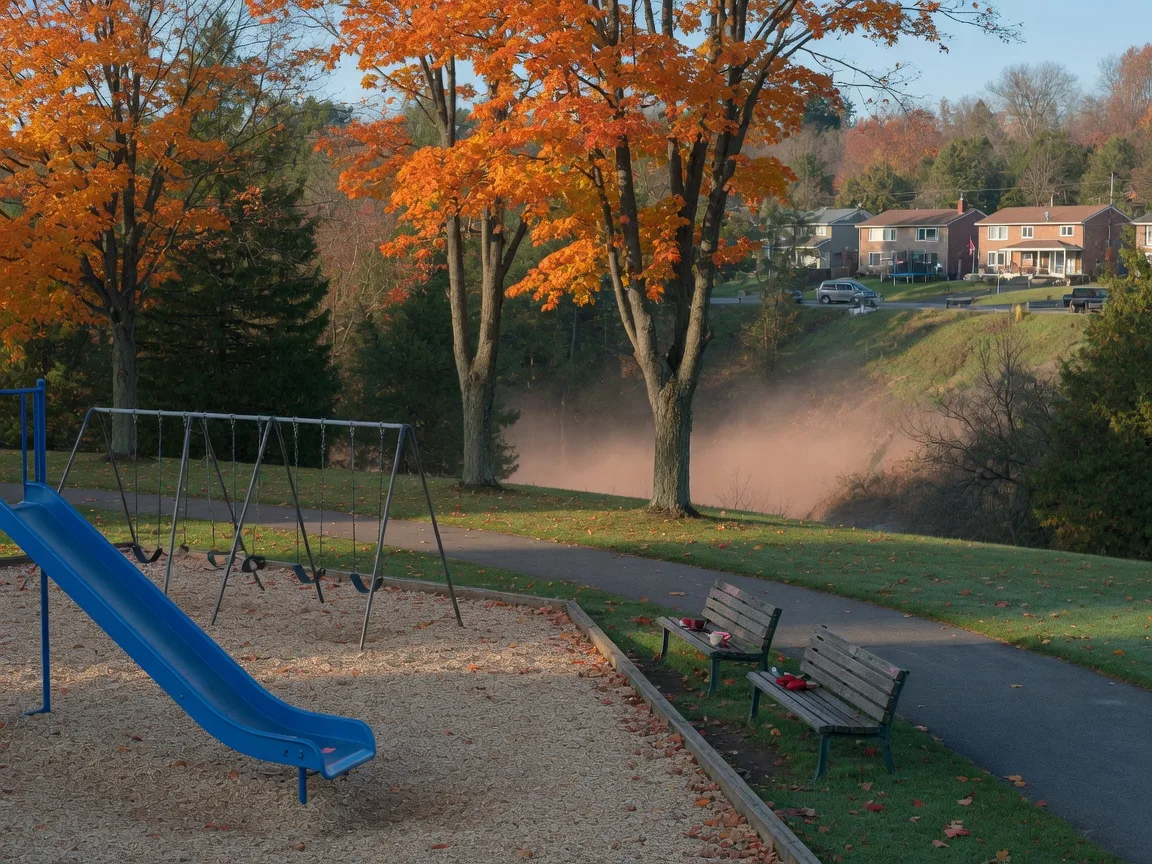
Daily errands are done along Simcoe Street North and Conlin Road, with SmartCentres Oshawa North just south of the neighbourhood anchored by Walmart, and Costco nearby. Ontario Tech University and Durham College sit at the north end of Simcoe, which brings coffee shops, services, and a young student population to the corridor. For a night out, head south: downtown Oshawa's restaurants, the Regent Theatre, and the Lakeview waterfront are 10 to 15 minutes by car.
Who is Kedron best for?
Kedron works best for buyers who want:
- Space per dollar: large lots in the older section and big new family homes in the newer phases.
- A quick Highway 407 connection for commutes across Durham and beyond.
- A quiet, residential, family-oriented street grid, without big-box retail on your corner.
- Access to growing schools, including the new public schools now open for north Oshawa.
It is less ideal if you want walkable downtown nightlife or the GO station at your doorstep: downtown Oshawa and the lakefront are a 10 to 15 minute drive south, and transit through the area is lighter than in the core. If you are weighing Kedron against the rest of the city, the 13 neighbourhood profiles cover every area, and our where to live in Oshawa guide compares the districts for first-time buyers.
What is coming to Kedron
Kedron is still growing, which matters if you are buying for the long term. Former farm fields north of Conlin Road are becoming subdivisions, the 407 corridor continues to attract employers and services, and two new public schools opened in September 2026 to keep pace with the families arriving. Growth brings new parks and amenities, but it also means construction traffic, and school catchments can change as boundaries are redrawn. The new home builders page lists who is building in Oshawa and where, and the nearby Taunton neighbourhood guide covers the sister north-end community just west of Kedron.
Before you tour, set your budget and get pre-approved, because the newest Kedron homes can sell quickly. Our step-by-step buyer's checklist walks through the order of operations. Then spend a Saturday driving the crescents, walking the creek trails, and timing the 407 yourself. Keith and Lisa have sold homes across north Oshawa for years; they can shortlist the right streets, confirm a school catchment for a specific address, and tell you straight whether a listing is fairly priced. Send them a message or book a free call to start your search.